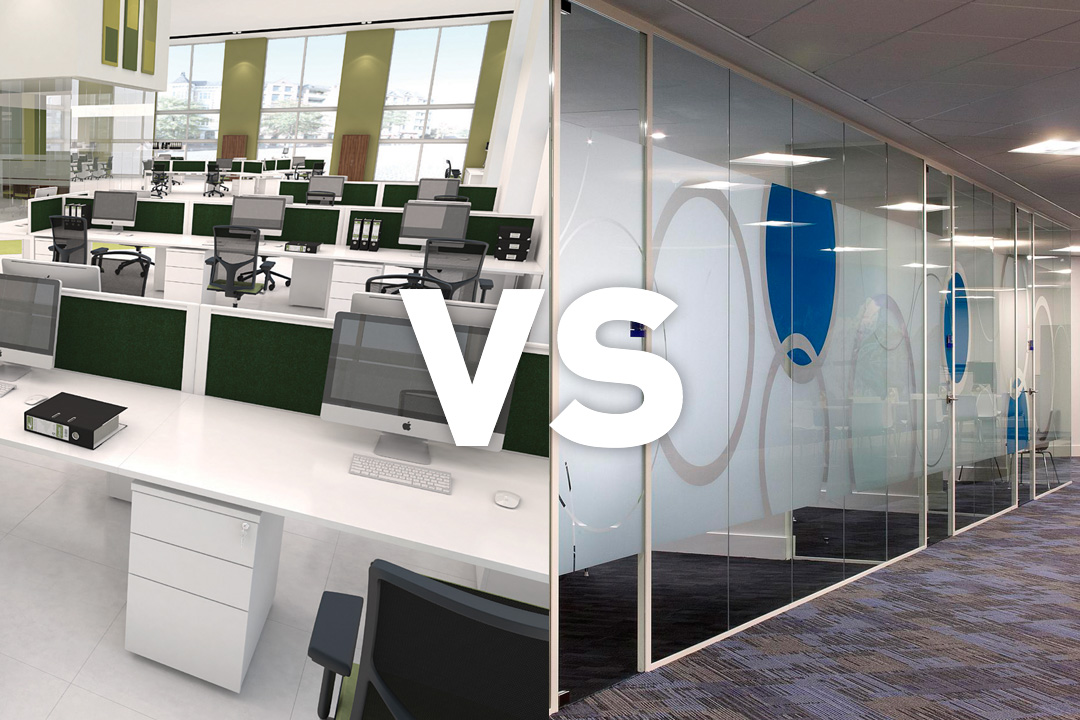
The selection between open and private workspaces determines which environment produces better results for corporate office interior design.
Every workplace design conversation includes the essential decision between open office spaces and private areas. Office Interiors of New Jersey serves businesses across various sectors by creating workplaces that unite team collaboration spaces with individual work areas and visual branding elements. The following section explains both workspace styles together with their suitable application contexts.
Open Workspaces: Collaboration and Energy
Open office layouts emphasize transparency, communication, and flexibility. The office design features open desks, shared tables, and low partitions, enabling team members to move freely among one another while creating a unified atmosphere. Open layouts offer advantages to creative teams, startup organizations, and marketing and sales departments by enabling fast decision-making and immediate team collaboration.
Benefits:
- Encourages teamwork and idea sharing
- Keeps the build-out costs low because there is no need for construction or wall installation.
- Enhances visibility and supervision
Challenges:
- Can lead to distractions and noise
- Reduced privacy protection and shorter attention spans.
- Not ideal for confidential conversations or deep work
Office Interiors of NJ creates more effective open workspaces through the implementation of acoustic furniture, modular dividers, and dedicated quiet zones, enabling staff members to switch between teamwork and individual focus whenever they want.
Private Workspaces: Focus and Functionality
The workplace requires private offices and enclosed workspaces because they serve two main purposes: to safeguard confidential data and enable staff members to focus, while leaders must uphold their leadership position. The following groups make up the target audience for this solution: C-suite executives and members of HR, legal, and finance departments. The designed areas allow employees to do deep work while having private meetings and personal conversations, thanks to better sound quality and reduced background noise.
Benefits:
- Boosts concentration and reduces distractions
- Supports roles that handle sensitive information
- Provides a sense of ownership and status
- Helps staff develop skills to deliver professional services to clients.
Challenges:
- Takes up more square footage per person
- Can isolate employees from team collaboration
- Needs more funding to support wall construction, door installation, and building modifications.
Office Interiors of NJ provides design services to create private offices that blend functionality with aesthetic appeal and corporate branding.
The Hybrid Solution: Best of Both Worlds
The current corporate office interior design trend combines elements rather than relying on either complete openness or complete enclosure. Organizations today combine open office spaces with dedicated private areas, including quiet booths, semi-private collaboration spaces, and individual offices.
Businesses can maintain their ability to adapt through smart layout planning and movable furniture systems, and multipurpose areas, which eliminate the need for continuous facility renovations.
The design of an ideal workspace needs to align with your team’s organizational structure, your workplace culture’s values, and the targets of your business operations. The open workspace layout creates an active environment that uses small areas, but private offices help staff members stay focused while protecting their individual privacy. The most effective corporate office interiors achieve their best results through the combination of two fundamental elements that create a flexible work environment that enables all staff members to succeed.